

Risky Bulletin Newsletter
July 29, 2026
Risky Bulletin: New Chinese cyber contractor identified
Written by

News Editor
This newsletter is brought to you by application allow-listing software maker Airlock Digital. You can subscribe to an audio version of this newsletter as a podcast by searching for "Risky Business" in your podcatcher or subscribing via this RSS feed. You can also add the Risky Business newsletter as a Preferred Source to your Google search results by going here.
The cyber sleuths at Intrusion Truth have uncovered a new secretive Chinese IT company that appears to work as a cyber contractor and tool developer for Chinese state-sponsored hacking operations.
Online clues appear to suggest that Guangdong Chanming appears to have developed RedRelay (aka ORBWEAVER), an ORB network (aka proxy botnet) that was used by almost a dozen Chinese APT groups to hide the origin of their attacks.
The list includes the likes of APT15, Red Vulture, Ke3chang, Vixen Panda, Playful Dragon, Nylon Typhoon, and others.
According to Intrusion Truth, the company's customers allegedly include the Chinese People's Liberation Army and the Ministry of Public Security, which manages China's police forces.
Researchers say the RedRelay botnet is referenced internally and in procurement documents as "Anonymous Network System."
The botnet was allegedly built on top of Free Connect, a now-defunct Chinese VPN tool that was initially developed by one of the company's employees.
Intrusion Truth says RedRelay is just one of many cybersecurity and hacking tools the company has developed and patented. Other tools reference tunneling capabilities, multi-functional proxy systems, network vulnerability testing, Android secrets extraction, Telegram data collection, and a file transfer network.
The new report comes to solidify the idea that China's cyber capabilities have evolved over the past decade from purely government-managed cyber units to a vast network of individual private contractors that provide the state with malware, hacking tools, or do the hacking themselves and just deliver the stolen data at the end.
Risky Business Podcasts
In this edition of Between Two Nerds, Tom Uren and The Grugq discuss how important people are to cyber power and whether the rise of AI is changing that.
Breaches, hacks, and security incidents
Cyberattack disrupts water utilities in 30+ Minnesota communities: A cyberattack has disrupted water utilities in more than 30 Minnesota communities. Disruptions were reported in cities like Braham, Maple Plain, Plymouth, St. Paul, and more. Some towns reported brief outages but water remained safe to drink. Officials have activated a statewide cybersecurity response to deal with the incidents. The state's IT bureau did not attribute the attacks. [Minnesota IT Services // StateScoop // Braham // Maple Plain // Plymouth // St. Paul]
HuggingFace hack post-mortem: Almost a dozen tech execs and CISOs have authored a post-mortem report on the OpenAI-HuggingFace breach. The report was reviewed and approved for publication by HuggingFace. The newish part for my reading was the "capture-the-flag benchmark code that closely resembled rootkits," but it depends on what you know or read about the incident so far. [CSA]
Cyberattack closes clinics in US: A cyberattack has shut down the clinics and hospitals of non-profit healthcare provider AnMed. The group operates four hospitals and more than 60 physician clinics across two US states, in Georgia and South Carolina. Patients are being redirected to nearby hospitals unless in need of urgent medical care. [DysruptionHub // AnMed]
Bank of Baroda hack: Indian bank Bank of Baroda has confirmed a major security breach after hackers leaked some of its data on an underground hacking forum. [The New Indian Express]
Frontier Airlines breaches: American ultra-low-cost airline Frontier has allegedly suffered three security incidents this year. [DataBreaches.net]
Claude chat leaks: After it happened to ChatGPT and DeepSeek users, it's now the turn of Claude customers to find out that the conversation sharing tool creates a public URL that gets indexed by Google where everyone can read any chat they shared in the past. [Reddit // Reddit]
UPDATE, ITS WORSE THAN THE CHATS
— Om Patel (@om_patel5) July 26, 2026
the same thing is happening with shared artifacts. every app, doc, dashboard and tool people published from claude is also sitting indexed and searchable
people have already pulled up internal company dashboards, full project plans with client… https://t.co/ZzezhlDbom pic.twitter.com/Ljk3zzXL4N
AI, general tech, and privacy
Microsoft releases cyber model: Microsoft has released MAI-Cyber-1-Flash, an AI model for cybersecurity tasks. The model has allegedly achieved a 96% score on the CyberGym test and has half the operational cost of other models. The company has also released Perception, a framework for managing AI agents across enterprise networks. [Microsoft // Microsoft]
Open Secure AI Alliance: A coalition of tech companies and open-source organizations have founded the Open Secure AI Alliance. The new industry group will develop and share open-source AI tools for defenders. The new alliance took its cue from the recent OpenAI-Hugging Face hack, where Hugging Face's security team couldn't use frontier models to investigate the incident. Thirty-seven tech companies and open-source foundations are part of the new Open Secure AI Alliance, including the likes of Nvidia, Microsoft, IBM, and Cisco. [NVIDIA]
Moonshot open-sources Kimi K3: Chinese security firm Moonshot has open-sourced the open-weights and the technical report behind its Kimi K3 AI model. [Hugging Face // GitHub]
Hugging Face's role in the AI nudify ecosystem: An investigation has found that Hugging Face doesn't just host models to generate non-consensual intimate images, but its Spaces feature actually hosts some of these services. [AI Forensics]
Chinese company behind nudify apps: A Chinese company named GatherOne is behind thousands of Facebook and Instagram ads promoting nudify apps. [Tech Transparency Project] [h/t Ada3000]
"The partner, GatherOne, is one of roughly a dozen Chinese ad agency firms authorized by Meta to place ads on behalf of Chinese clients. Because China blocks Facebook and Instagram inside the country, Chinese advertisers who want to use Meta platforms to reach foreign audiences must in theory go through one of these intermediary firms."
Government, politics, and policy
UK rejects Bahrain state immunity claim: The UK Supreme Court has ruled that Bahrain can't claim "state immunity" and must stand trial in a lawsuit filed by two dissidents over the government's use of spyware. Saeed Shehabi and Moosa Mohammed claim that the Bahrain government used the FinSpy spyware to hack their laptops in 2011. The two had worked for an organization that provided assistance to political prisoners in Bahrain. The two were later beaten up and had their citizenship revoked. The Bahrain government has denied the allegations. [The Record]
Wyden urges phasing out old VPNs: Senator Ron Wyden of Oregon has urged the US government to phase out the use of old and insecure VPN gateway devices. Wyden has asked the heads of CISA, NIST, and the OMB to set mandatory security standards for the use of VPN devices. Under the new standards, federal agencies would be banned from buying outdated devices. Agencies would also have to replace older devices with new systems. Sen. Wyden cited the increase in adversary attacks targeting outdated VPN gear. [Sen. Ron Wyden]
Denmark is building a reserve bank in case of cyberattacks: The Danish central bank is building a secondary payment system that will activate in case of a cyberattack that cripples the country's normal banking sector. The secondary system will be able to support payment cards, salary payments, and money transfers. The system will be deployed at grocery chains and pharmacies by year-end 2026 for a pilot test. [Global Finance]
Sponsor section
In this Risky Business sponsor interview, James Wilson chats with Airlock Digital co-founders David Cottingham and Daniel Schell about how attackers are using LLMs to enumerate EDR detections.
Arrests, cybercrime, and threat intel
North Korea arrests bank hackers: North Korean authorities have arrested a cybercrime group who hacked two of the country's banks. The group was led by discharged veterans from North Korea's intelligence service, as well as students recruited from two Pyongyang universities. The group allegedly hacked the Chosun Central Bank and the Foreign Trade Ban to slowly siphon funds to accounts in China. The stolen money was converted into fiat currency and sent back to North Korea. [DailyNK] [h/t Alex Rudolph]
Russia arrest smisher: Russian authorities have arrested a 20-year-old man for a smishing and hacking campaign. The suspect gained access to online banking and government accounts, from where he took loans or stole its victims' funds. He made between $1,000 and $6,000/day, and also worked with two accomplices. [Russian MVD]
Hong Kong arrests SMS blaster: Hong Kong police have arrested a 25-year-old man for driving around the city with an SMS blaster inside his car. The suspect had allegedly sent SMS messages impersonating an online investment company. At least one customer lost $141,000. The SMS blaster device worked even if China Mobile turned off 2G coverage in the city, as user devices still processed the messages. [CommsRisk]
Ariana Grande sues hackers: Pop star Ariana Grande has sued two hackers for stealing and leaking unreleased music and studio footage. The hackers allegedly stole the materials from her photographers and producers. The suit seeks to unmask the hackers as well as individuals who helped distribute the stolen data. [TMZ]
Victims sue Apple over fake wallet app: Three users have sued Apple after they lost $1.8 million to a malicious iOS app. The three plaintiffs claim that Apple failed to remove a malicious crypto-wallet from its App Store despite user reports. The malicious iOS app posted as the legitimate Sparrow Wallet, which only has official versions for Windows, macOS, and Linux. The three users seek reimbursement of the stolen funds. [MacRumors]
BMC exposure: More than 36,000 BMCs are exposing their IPMI ports online, with more than 24,000 of those leaking authentication credentials via a 13-year-old vulnerability they still haven't patched. [Lava]
Guide for security OT networks: Cyber authorities from Australia, the US, and the UK have published joint guidance on how to isolate and secure OT networks. [ACSC // CISA // UK NCSC]
Joyfill supply chain attack: Socket Security, Step Security.
STAC4749 vishing: A major vishing campaign is hitting the Teams environments of American companies. Sophos attributed this campaign to a group it tracks as STAC4749. [Sophos]
IDPI market: You won't believe this, but there's an underground market for selling phishing-optimized indirect prompt injections. [Proofpoint]
Binance is hindering law enforcement investigations: Cryptocurrency platform Binance has updated internal policies to complicate the steps law enforcement need to take to receive information about its customers and their transactions. The new policy entered into effect in April. It forces law enforcement agencies to route data requests to government agencies in the UAE, which is delaying responses and investigations. Police officers from five European countries say the process is hindering their efforts to identify scammers and money launderers. The new policy doesn't apply for serious crimes such as child sexual abuse materials, terrorism, or an imminent threat to life. [NYT]
Malware technical reports
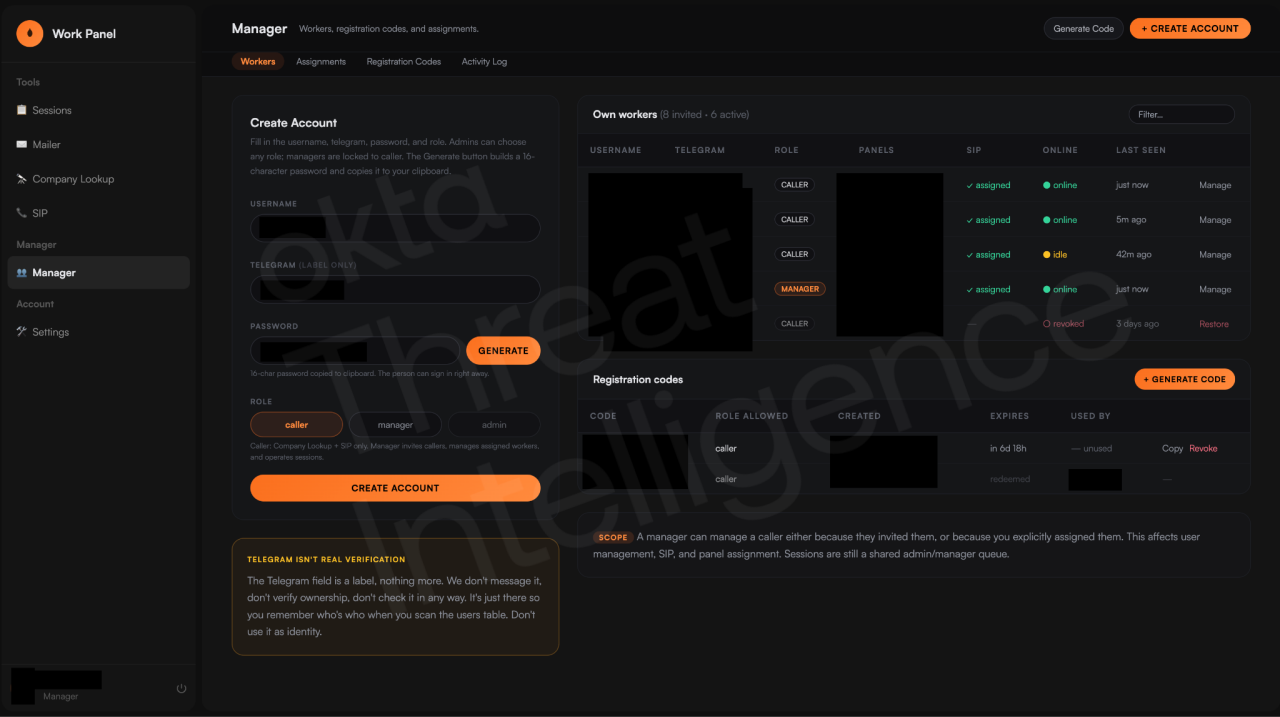
Work Panel vishing kit: Okta security researchers have gained access to Work Panel, a backend system designed to automate vishing and social engineering operations. [Okta]
AngrySpark spyware update: Security researcher Bill Marczak has found some overlaps between Operation Triangulation and the AngrySpark spyware. The first was a complex hacking operation that targeted Kaspersky employees and Russian officials while the second was a one-off spyware infection that targeted an individual in the UK. [Bill Marczak // Gen Digital]
Dysphoria botnet: A new botnet has infected more than 200,000 routers, security cameras, and IoT devices since March this year. According to Chinese security firm QiAnXin, the new botnet appears to be the backend of a new DDoS-for-hire service named the Dysphoria Network. Besides DDoS capabilities, the botnet also includes the ability to work as a giant proxy network. [QiAnXin // CNCERT]
Tengu botnet: There's also another IoT botnet going around. This one is based on the old Mirai, goes by Tengu, and is focused on DDoS attacks. [Nozomi]
MedusaHVNC: A new remote access trojan named MedusaHVNC is being advertised in underground circles as a new MaaS offering. The RAT's most unique feature is its HVNC module that works by opening a browser on a separate Windows desktop. [BlackFog]\
Vidar 2.0: Picus security researchers have published a technical breakdown of the well-known Vidar infostealer. [Picus]
Flying Eagle Android RAT: Researchers have found more than 170 C&C servers linked to a Chinese cybercrime operation. The entire operation was built around the leaked source code of an Android RAT named Flying Eagle. [Hunt Intelligence]
ByteToCrypt ransomware: TLPBlack looks at ByteToCrypt, a Linux-based ransomware that was used in the attack against Romania's land registry agency this month. [TLPBlack]
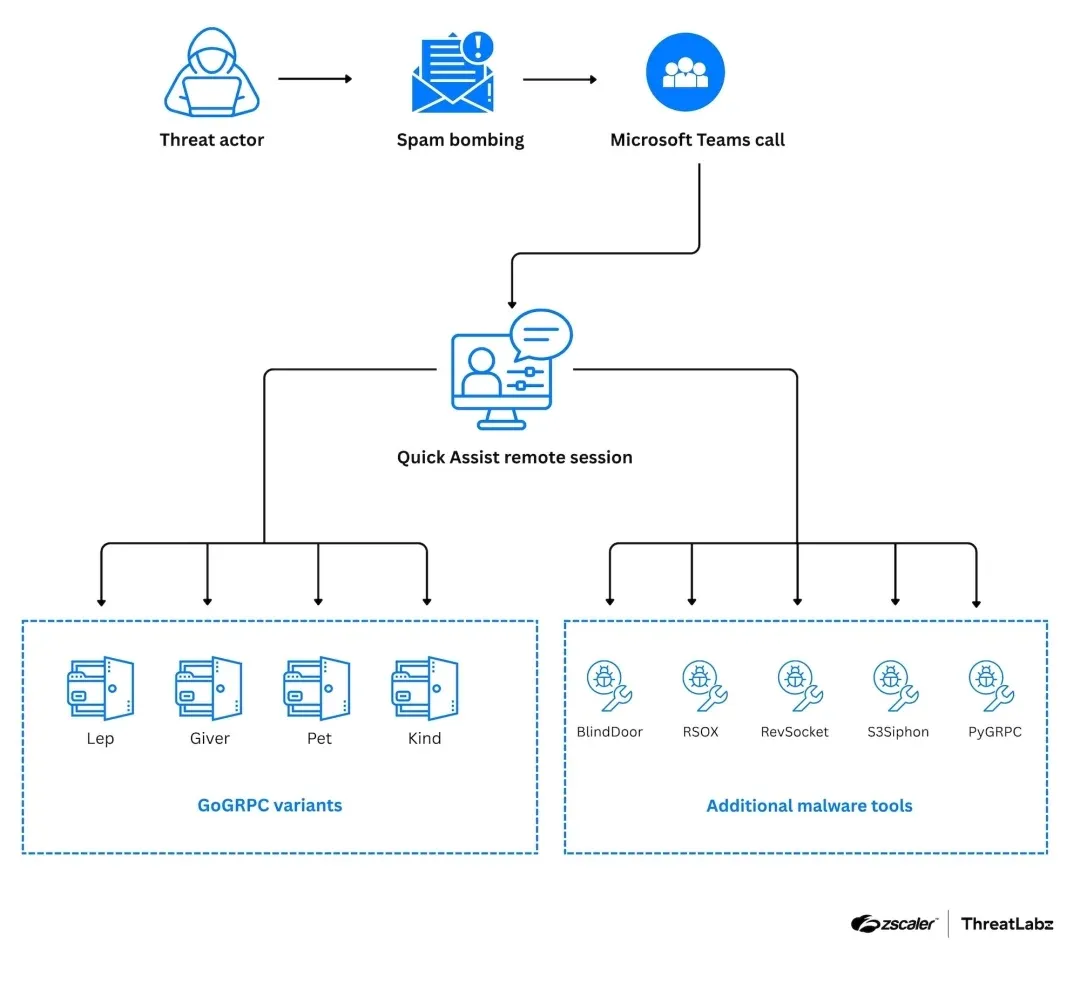
GoGRPC backdoor: Zscaler looks at GoRPC, a new Go-based backdoor that is being deployed in targeted corporate attacks. The initial entry point are spam-bombing attacks followed by a call from attackers, posing as the victim's IT/helpdesk team. [Zscaler]
Sponsor section
In this product demo of the Airlock Digital application control and allowlisting solution, Patrick Gray speaks with Airlock Digital co-founders David Cottingham and Daniel Schell.
APTs, cyber-espionage, and info-ops
Mirage Kitten: Kaspersky analyzes the new malware arsenal deployed in recent attacks by Mirage Kitten, an Iranian APT also known as UNC1549, Smoke Sandstorm, and Nimbus Manticore. [Kaspersky]
"According to our telemetry, we identified victims across Middle East and African countries including Egypt, SMB and government environments in Jordan and Tanzania, aviation organizations in Pakistan, telecommunication companies in Ethiopia and financial-sector entities in Burkina Faso."
Vulnerabilities, security research, and bug bounty
Security updates: Adobe, Apple, Artifactory, JetBrains, Nuxt, vBulletin.
New TeamCity RCE: JetBrains has released a security update for TeamCity CI/CD servers. The patch fixes an unauthenticated remote code execution bug that can allow attackers to take over servers exposed on the internet. The bug, tracked as CVE-2026-63077, impacts on-premises servers. Past TeamCity security flaws have seen widespread exploitation. [JetBrains]
Arista zero-day: Hackers are exploiting a zero-day in Arista VeloCloud Orchestrator on-premises servers. Tracked as CVE-2026-16812, the zero-day allows attackers to inject and run commands on the server. All VeloCloud servers reachable over the internet are vulnerable. The zero-day received a 10/10 severity score due to its ease of exploitation. [CISA // Arista patch]
vBulletin RCE: The vBulleting forum software has released a security update to patch an unauth RCE bug that could have allowed remote attackers to run malicious PHP code on servers. [SSD Disclosure // vBulletin patch]
JFrog patches bug exploited in Hugging Face hack: JFrog has released a security update to patch a zero-day in Artifactory artifact repository management servers. The zero-day was exploited by OpenAI cyber models earlier this month to hack the Hugging Face AI platform. JFrog says OpenAI reported the zero-day as soon as they learned of it. [JFrog // Artifactory patch]
Better accuracy on an old key-sniffing attack: A few years back, academics developed a technique to determine what keys a user is hitting based on an audio recording and infer what the user was typing. A recent paper has refined that attack, which now apparently has a 90+% accuracy rate. [arXiv]
Infosec industry
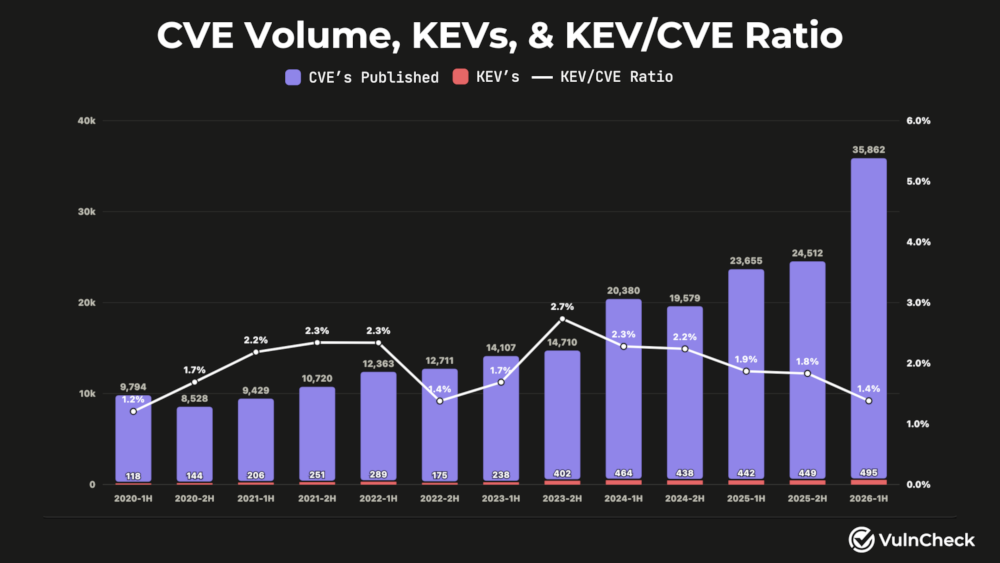
Threat/trend reports: 1Password, Arctic Wolf, CertiK, Cisco Talos, Cloudflare, Forescout, Netskope, and VulnCheck have recently published reports and summaries covering various threats and infosec industry trends.
Acquisition news: AI security firm Cyera will acquire Israeli cyber startup Oasis Security in a deal valued close to $1 billion. [Cyera // Calcalist]
BSides Belgrade 2026 videos: Talks from the BSides Belgrade 2026 security conference, which took place in March, are available on YouTube.
BSides Charm 2026 videos: Talks from the BSides Charm 2026 security conference, which took place in April in Baltimore, are available on YouTube.
BSides June 2026 videos: Talks from the BSides Leeds 2026 security conference, which took place in June, are available on YouTube.
Risky Business podcasts
In this edition of Seriously Risky Business, Tom Uren and James Wilson talk about the future of open-weight models. For different reasons, both the Chinese and American governments have reasons to crack down on them.