

Risky Bulletin Newsletter
August 31, 2026
Risky Bulletin: Dutch intel services to get extensive new powers
Written by

News Editor
This newsletter is brought to you by Dropzone. You can subscribe to an audio version of this newsletter as a podcast by searching for "Risky Business" in your podcatcher or subscribing via this RSS feed. You can also add the Risky Business newsletter as a Preferred Source to your Google search results by going here.
The Dutch government has put forward a new bill that would greatly expand the surveillance powers of the country's two intelligence agencies.
The new bill simplifies procedures to improve operational speed but also adds new requirements and capabilities.
Officials cited the threat of war with Russia and the increasing aggressiveness of countries like China and Iran as the main reason to overhaul the capabilities of AIVD, its domestic security and intelligence service, and MIVD, its military counterpart.
The main changes are in regards to surveillance and offensive hacking operations that target countries designated as "foreign adversaries."
Currently, any kind of tapping operations require asking for permission and hacking operations require pre-deployment tests to prevent widespread disruptions.
Under the new law, the AIVD and the MIVD can tap or follow anyone up to one year without any kind of pre-approval, and hacking operations only require a supervisor's approval for the final stage, when the agencies copy data from a hacked system.
Both agencies also get a very powerful new legal power through which they can force Dutch companies or citizens to provide data on a target. If companies or individuals decline, they can be charged and risk a (yet undetermined) prison sentence.
According to De Volkstrant and Dutch privacy advocate Bert Hubert, the AIVD and MIVD are also spared from their usual veil of secrecy and under the new bill they can now also work with more government agencies, such as the police, tax agency, and the country's financial intelligence unit.
The bill also takes a page from the intelligence and surveillance laws of other countries, and now also lets the AIVD and MIVD share data with the private sector, which officials hope may accelerate or open new investigative leads.
The bill also merges the two supervisory bodies of each agency into one single entity, which will be named the Board for the Review and Supervision of Intelligence and Security Services (CTT).
One of the most problematic, or let's say criticized, areas of the new bill is the introduction of a so-called "state emergency" during which most supervisory and reporting obligations are suspended.
The bill doesn't specify what can trigger this state, and it can be anything from actual war to the Parliament invoking it for mundane stuff like anti-government protests, which is why it's the most criticized part of the bill's text.
The Netherlands is part of a growing number of European nations who are overhauling their surveillance and intelligence laws in the aftermath of Russia's invasion of Ukraine and the need to have deeper insight into what Russian hybrid operations are doing inside their borders.
Ireland passed a new lawful intercept law earlier this year, while Germany is just a few steps ahead of the Netherlands when it comes to expanding its own intelligence laws. France is also looking at overhauling certain laws, but the projects seemed to be aimed at increasing internal surveillance more than targeting foreign actors.
[h/t RVD]
Risky Business Podcasts
The main Risky Business podcast is now on YouTube with video versions of our recent episodes. Below is our latest weekly show with Pat, James, and guest co-host Ollie Whitehouse at the helm!
Breaches, hacks, and security incidents
Moonwell hacked for $8.7m: Hackers have stolen $8.7 million worth of crypto-assets from the Moonwell DeFi platform. The attackers manipulated the platform's MAMO token prices to borrow the stolen assets with no collateral. Moonwell has paused all borrowing on the platform to investigate the attack. This is the company's fourth hack over the past twelve months, losing another $6.4 million in the previous incidents. [Moonwell post-mortem // The Block]
Cosmos patches bug exploited in crypto-thefts: Hackers have exploited a vulnerability in the Cosmos blockchain platform to steal almost $3 million worth of assets from six cryptocurrency companies. Cosmos has released a patch for the EVM vulnerability exploited in the attacks. The company says it also froze 99% of the stolen assets, pending legal investigations. [Cosmos post mortem]
Server Killers claims Norway DDoS: Pro-Kremlin hacktivist group Server Killers has claimed responsibility for the DDoS attack that took down Norway's government network. [The Barents Observer]
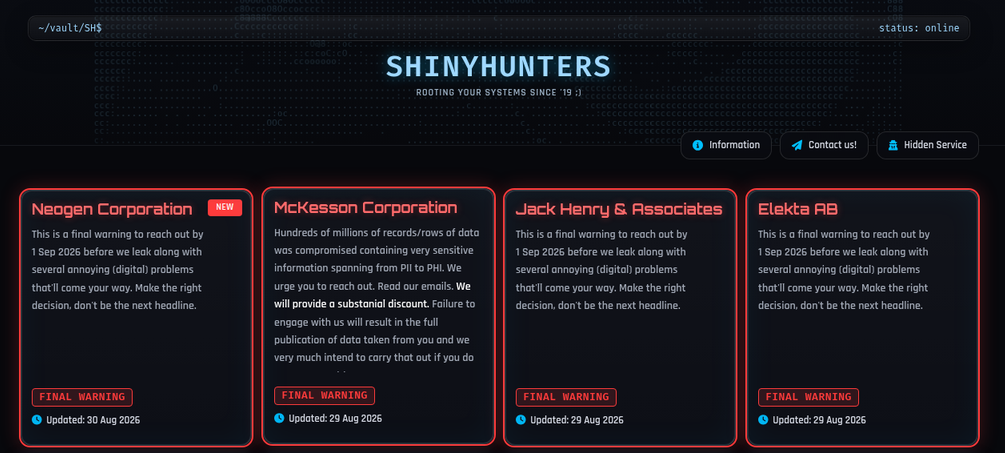
McKesson discloses breach: Pharma giant McKesson has confirmed a security breach of its systems after the ShinyHunters hacking group listed the company as a victim on its dark web leak site. The hackers claim to have stolen hundreds of millions of customer and patient records. McKesson says the hackers took the data from one of its third-party apps. [McKesson]
General tech, AI, and privacy
Brave Email Aliases: Brave has launched Email Aliases, a feature to let users sign up for online services without revealing their real email address. A similar feature already exists in Firefox and Safari too. [Brave]
Google introduces Android RAM limits: Google is introducing new memory rules for Android apps distributed through the Play Store. Starting in February 2027, apps must meet new memory thresholds or face reduced visibility on the Android app store. The company introduced the rules due to current RAM supply constraints and the fear that memory-hogging apps may damage Android usability and reputation. [Android Developers Blog]
Twitter takes down proxy tools: Twitter/X has sent a cease and desist letter to Nitter and XCancel because they were hosting tweets on their servers, allowing users to share links to Twitter content without actually visiting the site.
nitter.net is down. xcancel.com may go soon, too. all the respect to the folks at nitter for their services so far, but to be honest, X completely locking itself out of the web is probably a net positive for us all in the long term
— patak (@patak.cat) August 25, 2026 at 10:38 PM
[image or embed]
Government, politics, and policy
US designates hacktivist group as terrorist organization: The US State Department has designated Italian hacktivist and hacker collective Autistici/Inventati as a global terrorist organization. The government claims the group builds and operates digital infrastructure for violent Antifa cells and far-left militants. The group currently operates encrypted chats and email, web hosting, secure video conferencing and streaming, and other anonymity tools. The US Treasury has also sanctioned the group. [State Department // US Treasury // Micah Flee]
The US just designated an Italian hacker collective (similar to Riseup) a terrorist organization. Please read this article about Autistici/Inventati, which I’ve reposted micahflee.com/the-server-c...
— Micah Lee (@micahflee.com) August 29, 2026 at 10:48 PM
[image or embed]
"The idea that an organization that is an alternative host—for email, websites, and other services—could be designated a terrorist organization simply for providing a service that a lot of people want…is scary," EFF’s @jillian.bsky.social told @reason.com.
— Electronic Frontier Foundation (@eff.org) August 28, 2026 at 12:47 AM
[image or embed]
Judge blocks Pentagon's Anthropic ban: A judge in California has ruled that the Pentagon's designation of "supply chain risk" for AI company Anthropic and its ban from government contracting this year was illegal and baseless. [CNBC]
This is good. Just like with the TikTok ban you can hate Anthropic and think it’s an evil company that should cease to exist and still understand why it is a very very bad idea to let governments ban the distribution of software from developers who piss them off www.nytimes.com/2026/08/27/t...
— Evan Greer (@evangreer.bsky.social) August 28, 2026 at 5:08 PM
[image or embed]
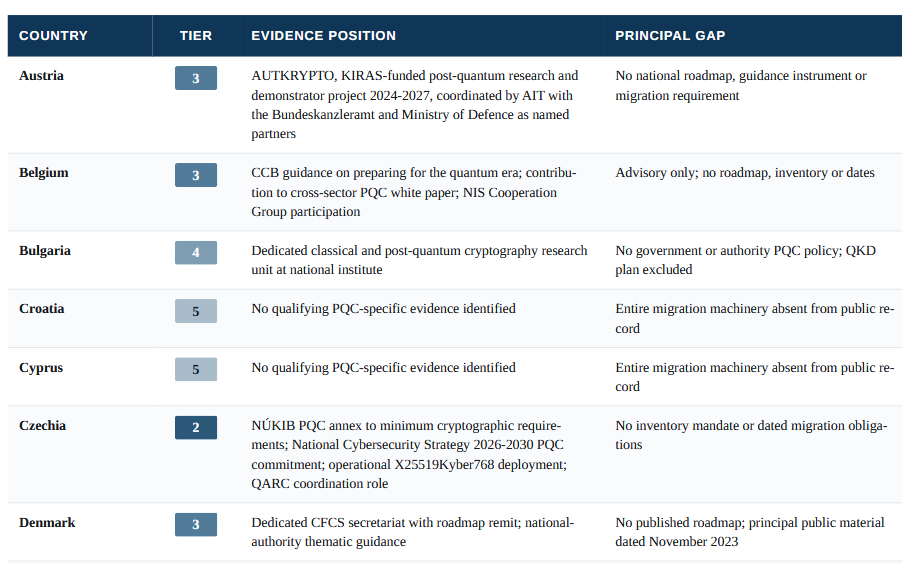
EU PQC readiness: An assessment of the EU's PQC readiness has found that the bloc has established significant policy direction on post-quantum transition but individual country readiness remains uneven across the continent. [Sitg Consulting]
Sponsor section
In this Risky Business sponsor interview, James Wilson chats with Dropzone AI’s founder and CEO Edward Wu to debunk the adage, "an attacker only has to be right once."
Arrests, cybercrime, and threat intel
Israel arrests security expert for hacking: Israeli authorities have arrested a local man for hacking and deploying malware on the networks of hundreds of companies. The suspect is in his 40s and allegedly worked as a cybersecurity professional. His name was not publicly released. His hacking campaign was discovered earlier this year by Israeli security firm Profero. [People and Computers // Profero tweets] [h/t Amitai Ziv]
BTS hacker gets 20 years: A South Korean judge has sentenced a Chinese national to 20 years in prison for stealing more than $275 million from local celebrities. He was the leader of a group that hacked a South Korean telco in 2023 and used the data to gain access to the victims' bank accounts. The group's most famous victim was Jung Kook, a member of K-pop supergroup BTS. [Yonhap]
German politician linked to cybercrime provider: A German politician is the owner of a sanctioned Serbian company that has helped a Russian bulletproof hosting provider evade its own sanctions. According to BalkanInsight reporters, Andreas Maul is the owner of Smart Digital Ideas, a company with no employees based in Belgrade. The US Treasury sanctioned it last November after it received the IP ranges of the sanctioned Aeza Group and then transferred them further to a new entity in the UK. Maul was born in Kazakhstan but is now a town councillor for Germany's far-right AfD party. [BalkanInsight]
Nigerian sentenced for scam crimes: A US judge has sentenced a Nigerian man to 95 months in prison for laundering more than $3.1 million from various online scam schemes. Oluwasegun Baiyewu received stolen funds, bought used cars, and shipped them to Nigeria. Authorities said the funds were stolen using business email compromises, romance, and unemployment insurance fraud scams. [DOJ]
Nigerians extradited to US for sextortion charges: The US has extradited two Nigerian men to face charges related to the sextortion and death of two teens in North Carolina and Mississippi. Adebola Festus Adekunle and Mudasiru Afeez Olawale were arrested in Nigeria three years ago in 2023. They were part of a larger group who specifically targeted children for extortion. [DOJ]
New npm malware: Someone compromised an OpenAI-related npm package via an unsecured publishing workflow. Don't install it, for now. [SafeDep // Step Security]
ClickExfil variation: Security researcher Jeffrey B. has developed a new ClickFix variation that can be used to exfil data instead of downloading malware. [Catching Phish]
TerminalFix campaign: Microsoft has spotted a new variant of the ClickFix attacks that tricks users into running malicious terminal commands that, in this case, install a reverse tunnel implant that lets attackers connect to an infected host. [Microsoft // Field Effect]
Magecart campaign: Ad security company Confiant has discovered a Magecart campaign that's stealing credit card data from compromised stores and using the Etherhiding technique to hide its infrastructure. [Confiant]
Hyflock RaaS: This ain't a full malware report, but it appears there's a new RaaS in town and they're experimenting with automating their C2 using AI.
Hyflock RaaS is building an AI-powered C2 The ransomware group claims its new custom C2 uses an LLM agent to operate the platform and interact with custom modules.
— marktsec (@marktsec.bsky.social) August 28, 2026 at 7:56 AM
[image or embed]
Malware technical reports
XLoader to ScreenConnect campaign: The Deception.Pro team looks at a campaign captured in its deception environment, where an operator used a PDF phishing lure to deploy the XLoader RAT and then run a hands-on-keyboard intrusion through ScreenConnect. [Deception.Pro]
Aurora ransomware: The Aurora ransomware had a leak that exposed some of its past operations and TTPs, including the use of the Cursor AI agent to plan post-compromise hands-on-keyboard attacks, in Russian, while excluding CIS countries. [CloudSEK // Gambit Security]
CRPx0 ransomware: Ransom-ISAC members have published a technical report on CRPx0, a new ransomware strain currently distributed through ClickFix campaigns. [Ransom-ISAC]
Sponsor section
In this sponsored product demo, Dropzone founder and CEO Edward Wu walks Risky Business podcast host Patrick Gray through the company's AI SOC analyst.
APTs, cyber-espionage, and info-ops
Israel tries to poison AI chatbots: The Israeli government is funding a fake US think tank to publish propaganda disguised as neutral research. A fake think tank named the Hanover Institute for Public Policy has published 124 reports consisting of more than half a million words over just nine days. Researchers believe the site is trying to poison AI chatbots to return Israel's point of view over its Palestinian war. A similar tactic has also been employed by Russia over its war in Ukraine. [The Guardian]
Vulnerabilities, security research, and bug bounty
Security updates: ASUS, cPanel, Grafana, HP, ServiceNow, TP-Link, WatchGuard.
RoR bug exploited in the wild: Threat actors are exploiting a major vulnerability in the Ruby on Rails framework to steal a web app's secrets and credentials. The bug impacts apps that use Active Storage, a component for interfacing with databases and cloud services. It doesn't require authentication and can be exploited against default configurations. The vulnerability is also known as KindaRails2Shell and was patched at the start of the month. [Patrick Garrity on LinkedIn // RyotaK // CVE-2026-66066]
Second set of PaperCut patches: PaperCut has released a second set of patches for a zero-day that was exploited last week, citing "post-patch issues with Card/ID lookup and SAML." [PaperCut // WatchTowr]
VMs won't contain AI agents: In a recent set of experiments, security firm Trail of Bits says cyber-capable AI agents were able to easily escape VM sandboxes on a regular basis. This included QEMU, KVM, libslirp, and CUPS. [Trail of Bits]
MCPJacking: Security researchers have found 155 MCP servers available through online marketplaces that have been abandoned and can be hijacked by threat actors. [Air Security]
HardBreacher zero-day: Security researcher Nightmare Eclipse has released a zero-day in the Kaspersky endpoint security product. Named HardBreacher, the vulnerability can let attackers gain admin access over a Windows system. The researcher says the exploit still needs some work to be stable. [GitHub]
UniBLEed vulnerability: Security researcher Olivier Laflamme has discovered a wormable vulnerability in Unitree G1 humanoid robots. The vulnerability can allow attackers within the robot's Bluetooth range to gain root on the device. The robot can then be used to compromise other robots, spy through its mics and cameras, or perform other types of physical or software attacks. [Olivier Laflamme]
Infosec industry
Threat/trend reports: AhnLab, Kaspersky, NCC Group, and Sitg Consulting have recently published reports and summaries covering various emerging threats and industry trends.
New tool—GitHub Recon: Security researcher Telemetry has released GitHGub Recon, a platform for detecting sensitive information exposed in public GitHub repositories.
New tool—optstop: The UK AISI has open-sourced optstop, a tool for live data collection from LLMs.
FIRSTCON26 videos: Talks from the FIRST 2026 security conference, which took place in June, are available on YouTube.
Risky Business podcasts
In this episode of Risky Business Features, James Wilson chats with Brian Krebs about the investigation that led him from recycled cybercrime handles and old forum records to the true identity of TeamPCP’s alleged leader in Perth.