

Risky Bulletin Newsletter
November 02, 2026
Risky Bulletin: Game devs are being extorted with AI game-cloning threats
Written by

News Editor
This newsletter is brought to you by Sublime Security. You can subscribe to an audio version of this newsletter as a podcast by searching for "Risky Business" in your podcatcher or subscribing via this RSS feed. You can also add the Risky Business newsletter as a Preferred Source to your Google search results by going here.
For the past several months, mysterious parties have been sending emails to small game developers and threatening to copy their public demos and unreleased games using AI tools and publish them in advance unless they are paid a ransom demand.
Extortion fees have varied between hundreds and thousands of US dollars.
Some of the extortion emails have made their way online over the past weeks, but the campaign is believed to be the primary reason a large number of game developers started pulling demos from the Steam platform.
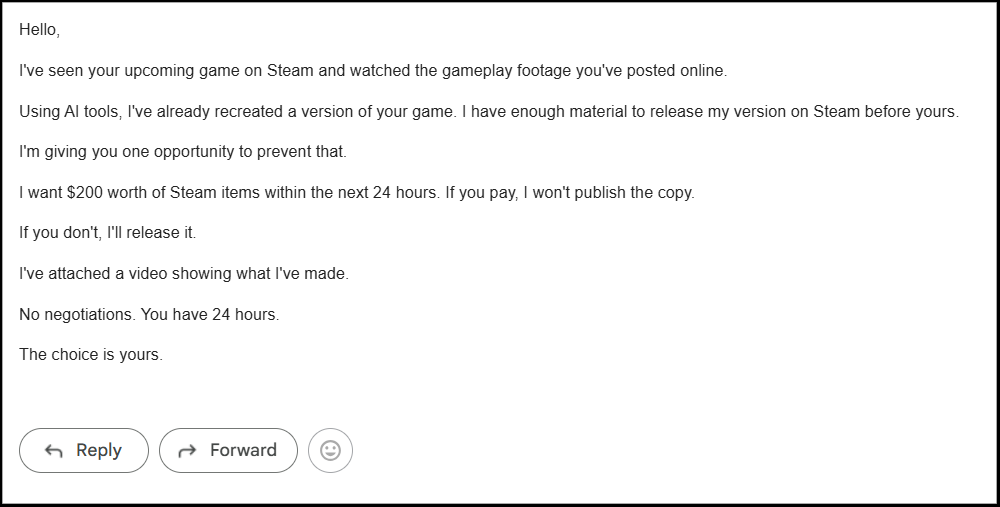
While it is unclear if the threat actor behind the emails has the capabilities to follow through with their threats, game developers are taking them seriously.
There have been several cases in recent months where AI-coded copies of smaller games that managed to break through and become popular, were quickly churned out and released on the market in a matter of days. This includes the cases of games like Needle In A Haystack and Escape the Walls. Other cases were documented by 404 Media back in July.
Speaking at a conference in South Korea, Valve executives addressed both issues. They said the extortion emails are a matter of law enforcement, but they also said that simplistic games will always be a target of such theft. They advised that developers should avoid games centered around one single mechanic that can be easily copied by AI sloppers and focus on quality, which are often too complex to just copy within a day and can be easily defended in legal cases.
Risky Business Podcasts
The main Risky Business podcast is now on YouTube with video versions of our recent episodes. Below is our latest weekly show with Pat, James and guest co-host Alex Stamos at the helm!
Breaches, hacks, and security incidents
Binance hack linked to North Korea: The FBI and cybersecurity researchers have linked the Binance hack to TraderTraitor, an elite North Korean hacking group specialized in crypto-heists. The group stole more than $6.34 billion from Binance in 20 minutes last Thursday. Binance froze almost half of the funds but the rest is now unreachable. Early evidence suggests the group gained access to a Binance employee's laptop. The incident is the biggest crypto-heist of all time. [TRM Labs // FBI // Binance // Elliptic // Citation Needed]
To cash out, the DPRK runs funds through mixers and bridges, then no-KYC exchanges, money mules, escrow services, platforms like Huione, banks and platforms in less-regulated jurisdictions, and OTC brokers. Sometimes they skip cashing out; they’ve used stablecoins directly for military procurement.
— Molly White (@molly.wiki) October 30, 2026 at 7:16 PM
Polymarket hack: Hackers have stolen more than $2.65 million from prediction market platform Polymarket in a security breach on Thursday. A threat actor compromised one of its CDNs and injected a malicious script on the Polymarket website. The script drained funds from Polymarket users who logged on the site. The company reimbursed all the 700 affected users who reported losses. [Polymarket // Ohey // NBC News]
Chainalysis discloses AI security breach: Blockchain analysis firm Chainalysis says a threat actor used AI agentic tools to gain access to its internal network last month. The company says an investigation found no evidence that the attackers accessed investigation data or customer details. Chainalysis says the incident is not connected to the recent Binance hack. [Chainalysis]
Claude Code for VS Code supply chain attack: A threat actor placed SSH backdoors on 5,000 systems by publishing a malicious version of Anthropic's Claude Code extension for VS Code. The malicious version was served from the Cursor IDE extension marketplace. Cursor removed the extension and worked with a cloud provider to take down the attacker's command-and-control server. [Cursor // Kevin Beaumont // Microsoft // Phorion // Daylight // Step Security // Socket Security // OpenSourceMalware]
Hacker steals Northflank AI API keys: A threat actor has breached the Northflank cloud platform and stolen AI-related API keys from customer accounts. The company disclosed the hack on Saturday and urged users to rotate AI-related API keys they stored on its platform. Northflank is still investigating the breach to find out how the hacker got in. [Northflank]
AI agent had access to Pentagon systems: An Accenture employee connected an AI agent to a secure Pentagon system and caused a major security incident earlier this year. The Claude Code agent took sensitive DOD files and uploaded them to a third-party website. The files contained controlled unclassified information (CUI) but also login credentials. The agent ran on the Pentagon network for two months before it was discovered. [WIRED]
Ukraine raid alarm hacked to show chemical and nuclear threat: Hackers have breached Ukraine's official Air Alarm app to show alerts for chemical, nuclear and street fighting across the capital city Kyiv. The message was displayed in Russian. No air raid sirens sounded in the city when the fake alerts went out. Officials canceled the alert 15 minutes later and urged the population to remain calm. [Pravda]
Well. This is new. Just before this alert came, there was an alert about a radiation threat. Fascist Russia escalating big time?
— Euan MacDonald (@euanmacdonald.bsky.social) November 1, 2026 at 10:53 PM
[image or embed]
CitySourced breach: Gov-tech platform CitySourced leaked 42 million records from an unsecured database left online without a password. [ExpressVPN]
Florida DoE breach: Hackers have breached the Florida Department of Education and stolen the personal data of 4.9 million students. The data was taken from a website where students filed for financial aid. The Department said financial aid is not at risk. [Florida DoE // WCJB]
More US law firms hacked: Six law firms—four in Canada and two in the US—have disclosed security breaches last week. The firms didn't say how, but they've likely been breached by the Silent Ransom Group, a hacking gang that has specifically targeted US law firms over the past two years. [Reuters // Law.com]
Resolve data breach: Online fashion retailer Revolve says hackers stole payment card details during a recent security breach. [The Record // SEC filing]
123 Reg AI breach: Hackers have breached UK domain registrar 123 Reg in September and stolen customer data. The company says hackers used AI to read sensitive data from one of its APIs. Scraped data included customer contact information, product information, and VAT numbers. [Alex Kinch]
Applebee's leak: American restaurant chain Applebee's has fixed a vulnerability that could have allowed threat actors to access customer data via a password left exposed inside its mobile app. [TechCrunch]
zkLink crypto-heist: Security firm SlowMist looks at the blockchain exploit that was used to steal $780,000 worth of tokens from the zkLink platform last week. [SlowMist]
VergeX crypto-heist: Hackers have stolen more than $3.6 million worth of tokens from the VergeX AI trading platform. The hack took place on Saturday. Users reported receiving transaction verification codes via email for operations they did not initiate. Thousands of users were affected, with the largest per user loss being $850. [VergeX]
Flap DNS hijack: Hackers hijacked the DNS records for the Flap cryptocurrency token to redirect users to a phishing site running a wallet drainer. The estimated losses are currently unknown. [Flap]
DigiD DDoS attack: The Dutch government's DigiD online portal was targeted with several waves of DDoS attacks last week and over the weekend. [AD.nl]
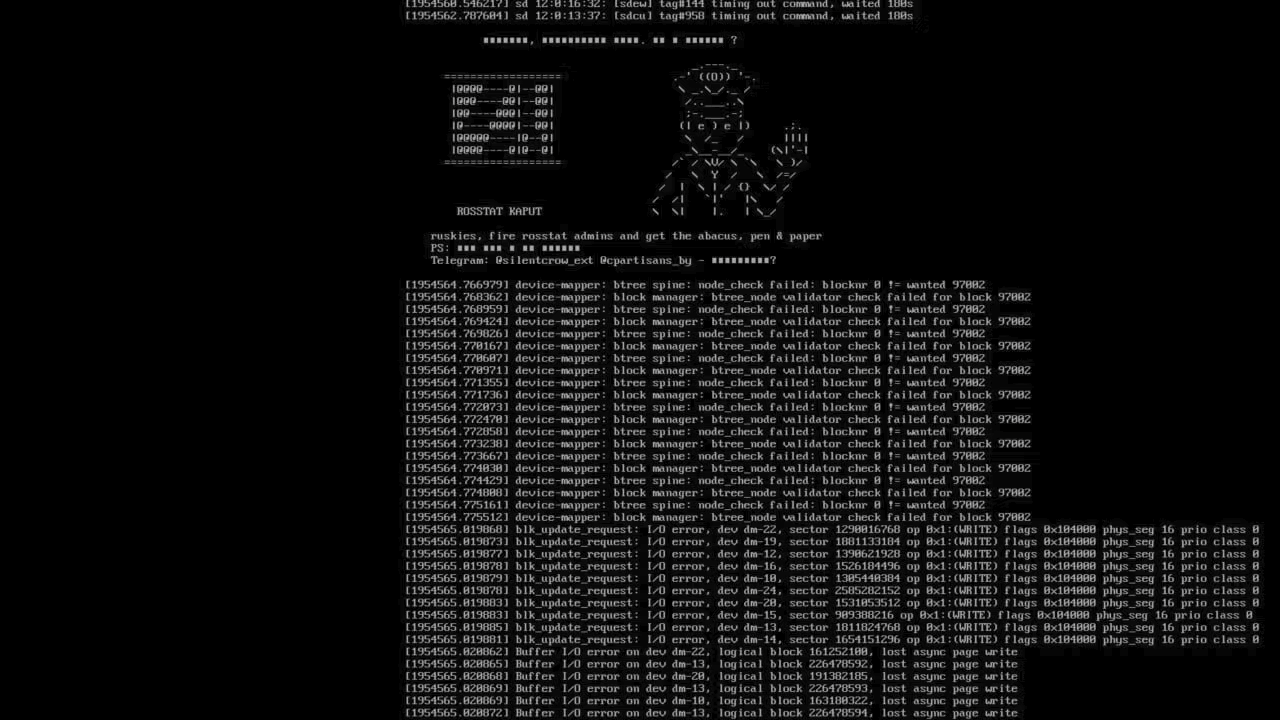
Hacktivists hack Russia's statistics service: Belarusian and Ukrainian hacktivist groups claim to have breached Russia's state statistics service Rosstat. The CyberPartisans and SilentCrow groups said they stole 23TB of data and wiped databases and internal systems. Some of the stolen data allegedly includes "state secrets." The two groups claimed they breached the agency almost six months ago. [CyberPartisans blog // CyberPartisans on Telegram // SilentCrow on Telegram]
General tech and privacy
Composer adds cooldowns: Composer 2.11, released last week, now supports dependency cooldowns so developers can avoid immediately installing compromised libraries and allow the cybersecurity ecosystem to detect and warn about them. This is not enabled by default, but needs to be configured for each project. [Packagist] [h/t Andrew Nesbitt]
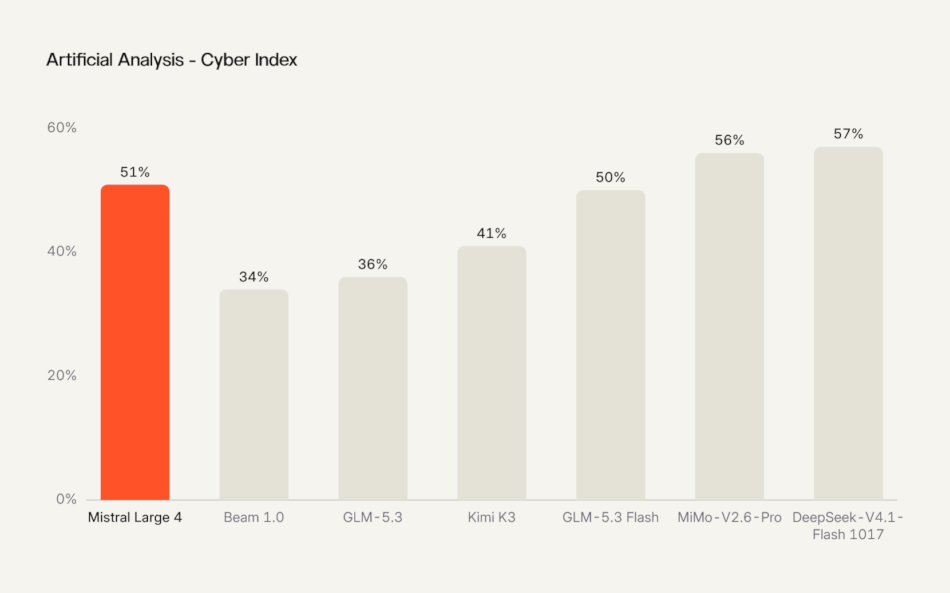
Mistral releases Le Chonk model: French AI company Mistral has released Le Chonk, its latest open-weight model for cybersecurity and coding tasks. [Mistral]
Government, politics, and policy
Civil society urges EU to revise surveillance export rules: The Center for Democracy and Technology and eight other civil society groups have urged the EU to revive its surveillance export rules to stop the proliferation of spyware and surveillance technologies. The orgs are asking for stronger rules to prevent technologies from being used for internal repression and human rights violations. The orgs are also asking authorities to ensure export controls are actually applied. [CDT]
Denmark drops Microsoft Office replacement plan: The Danish government has dropped a plan to replace Microsoft Office apps with an open-source alternative. A small pilot program launched last year had 38 employees use the open-source Collabora office suite instead of classic Microsoft apps. The Ministry for Research, Education, and Digitization ended the pilot after only six months after employees reported issues with file formats. Documents often turned up blank, with text formatting issues, or incorrect visual styles. [Computerworld.dk // Tom's Hardware]
Sponsor section
In this Risky Business sponsor interview, Catalin Cimpanu talks with Luke Wescott, Threat Detection Engineer at Sublime Security. Luke goes over the recent rise of calendar-based phishing campaigns over the past year and the reasons behind it.
Arrests, cybercrime, and threat intel
SEA hacker sentenced to 3.5 years in prison: A US court has sentenced a member of the Syrian Electronic Army hacking group to 42 months in prison. Ahmad Umar Agha was known under his hacker name of Th3Pr0. He hacked almost 50 Western media entities, businesses, NGOs, and government organizations. He was on the FBI Cyber Most Wanted list for almost a decade until his arrest last year. Another member of the same group charged by the US still remains at large. [DOJ // FBI Cyber Most Wanted]

DPRK laptop farmer pleads guilty: A Virginia man has pleaded guilty to hosting laptops at his home in a North Korean remote IT worker scheme. John Allen Kurrle Jr. also allowed North Koreans to use his identity when applying to US jobs. Kurrle faces up to 20 years in prison. [DOJ]
Nomad Bridge extradited to US: The US has extradited from Israel a dual Russian-Israeli national for allegedly hacking cryptocurrency exchange Nomad Bridge. Alexander Gurevich was one of several individuals who found and exploited a vulnerability in the platform in August 2022. He allegedly stole $2.89 million worth of crypto assets and then demanded a $500,000 reward to return the funds and share details about the bug. The Nomad Bridge lost more than $190 million in the hacks. [DOJ]
US charges student loan scam group: The US Department of Justice has indicted five Kenyan nationals for a "ghost student" fraud scheme. The five used the stolen data of American citizens to apply for student loans from the US government Federal Student Aid program. The group attempted to obtain almost $3 million in fraudulent student loans. [DOJ]
Apple sends new spyware notifications: Apple has sent out a new wave of mercenary spyware notifications to users in almost 100 countries. Apple did not provide any details about the infections. The new notification wave comes days after the disclosure of a spyware campaign that used online ads to identify and target users. [CyberScoop]
Heads-up: New round of Apple Threat Notifications is going out right now, distinct from the August wave and tied to new attacks! Apple’s notice: “Today’s notification is being sent to targeted users in 99 countries, and to date we have notified users in over 150 countries in total. The extreme cost, sophistication, and worldwide nature of mercenary spyware attacks make them some of the most advanced digital threats in existence today. As a result, Apple does not attribute the attacks or the notice you’re receiving to any specific attackers or geographical regions.” Received one and need help? DM me, happy to assist.
— Costin Raiu (@craiu) October 30, 2026
Threat actor poses as AI agents to steal creds: At least one threat actor has posed as an AI agent to scan enterprise networks for unsecured passwords, API keys, and cloud credentials. The attacker has rotated through 32 different AI bots, including ChatGPT, Claude, and Perplexity. The scans have been going on since late September. [Cequence]
Crypto-mining campaign on Hugging Face: A threat actor has uploaded malicious models on the Hugging Face portal that deploy cryptocurrency miners. The 31 malicious models were uploaded in September and downloaded more than 32,000 times. The same models were also uploaded to China's ModelScope portal. [Pluto Security]
"Nothing in this campaign required skill or money. The operator needed a few free accounts, plain Python files in repositories named after a popular model family, and one flag that users are used to setting. Scanners built for other threats returned clean results. When the first wave was removed, the second was up within days, with the payload adjusted to what the takedown had burned. One operator ran 31 repositories across seven accounts, and one wallet was still collecting payouts after the repositories behind it were gone."
Scammers set up fake prediction markets: Online scammers are setting up fake prediction markets in an attempt to capitalize on the popularity of platforms like Klashi and Polymarket. According to security firm Recorded Future, some of the fake portals are sold by the operators of traffic distribution platforms like AtlasCore, PolyFucked, and Magnetic Team. These groups also redirect web traffic from hacked sites to the fake prediction markets to help drive user signups. They rent the platform but also take a share of their profits. [Recorded Future]
PentAGI abuse: Google's Mandiant division says that besides the ARTEX AI penetration framework, threat actors are now also abusing a similar tool named PentAGI (Penetration Testing Artificial General Intelligence). [Google // PentAGI]
C3RB3R ransomware targets Synology NAS devices again: Synology has advised NAS device owners to install the latest firmware updates to counter a new wave of attacks with the C3RB3R ransomware. The same ransomware targeted Synology devices in 2024 but saw a new resurgence last week. Synology says the attackers are exploiting the same bugs used the last time. Security researchers say some users might be able to recover files without paying the attackers. [Synology // Reddit #1 // Reddit #2 // Reddit #3 // C3RB3R Rescue]
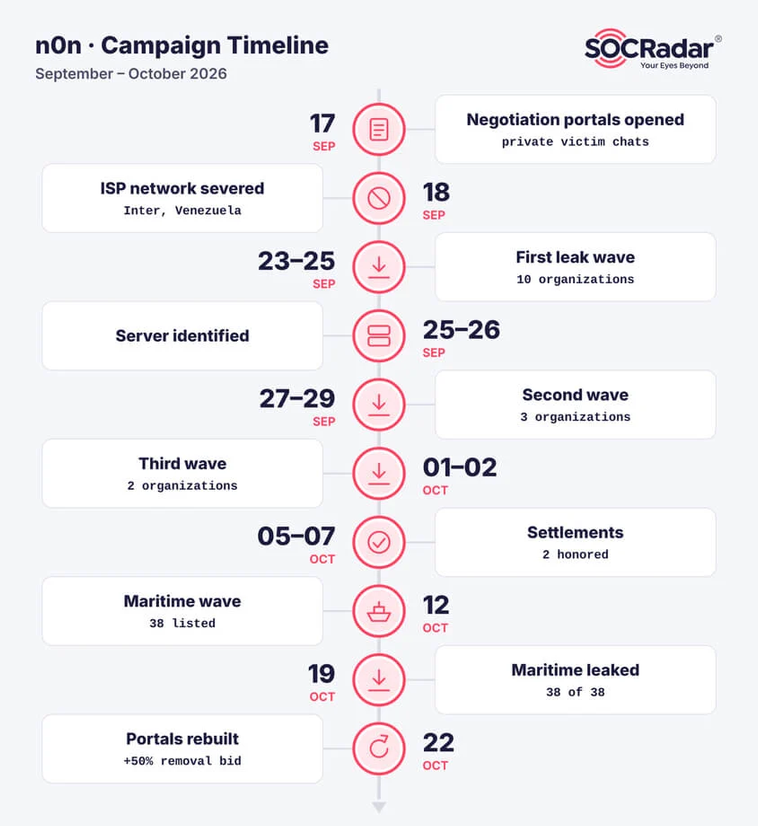
n0n leak: The newly launched n0n ransomware group spent more than $7,000 on LLMs to power its intrusion campaigns. The group launched in September and breached almost 100 organizations, including a large batch of port authorities and maritime organizations. Researchers learned of the group's inner workings after the group left a malware staging server exposed online with details on their attack chains. [SOCRadar]
Malware technical reports
DefenderKiller: Flashpoint researchers have spotted a new EDR killer toolkit in the wild that abuses a driver in Microsoft Defender itself to kill other security software. [Flashpoint]
Vibe-coded phishing kits: LevelBlue researchers have found four new phishing kits (BlackApex, DarkApex, SPY, and XXX101) that appear to have been vibe-coded. [LevelBlue]
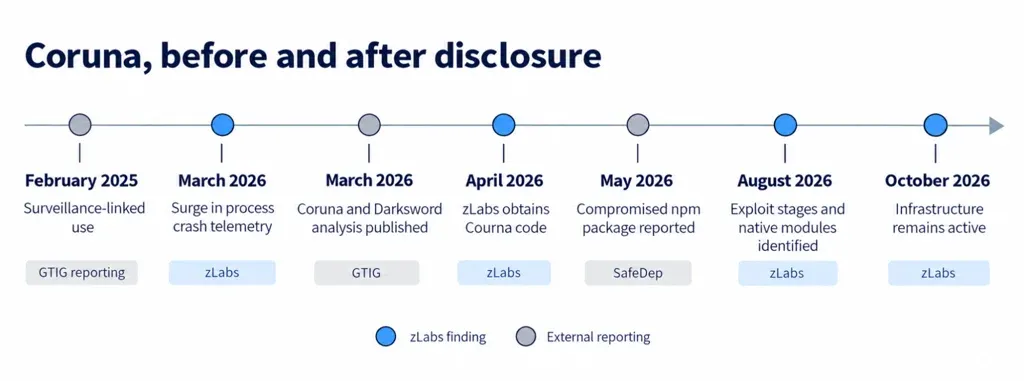
Coruna and DarkSword: Zimperium researchers look at the way Coruna and DarkSword work, two iOS exploit kits that recently leaked online this year. [Zimperium]
Amatera: ESET's researchers have published a deep dive into Amatera, a highly popular infostealer across LATAM. [ESET]
VOLTA: There's a new infostealer on the market that ships with a built-in LLM that analyzes the victim's credentials and ranks them by monetization value. [Cisco Talos]
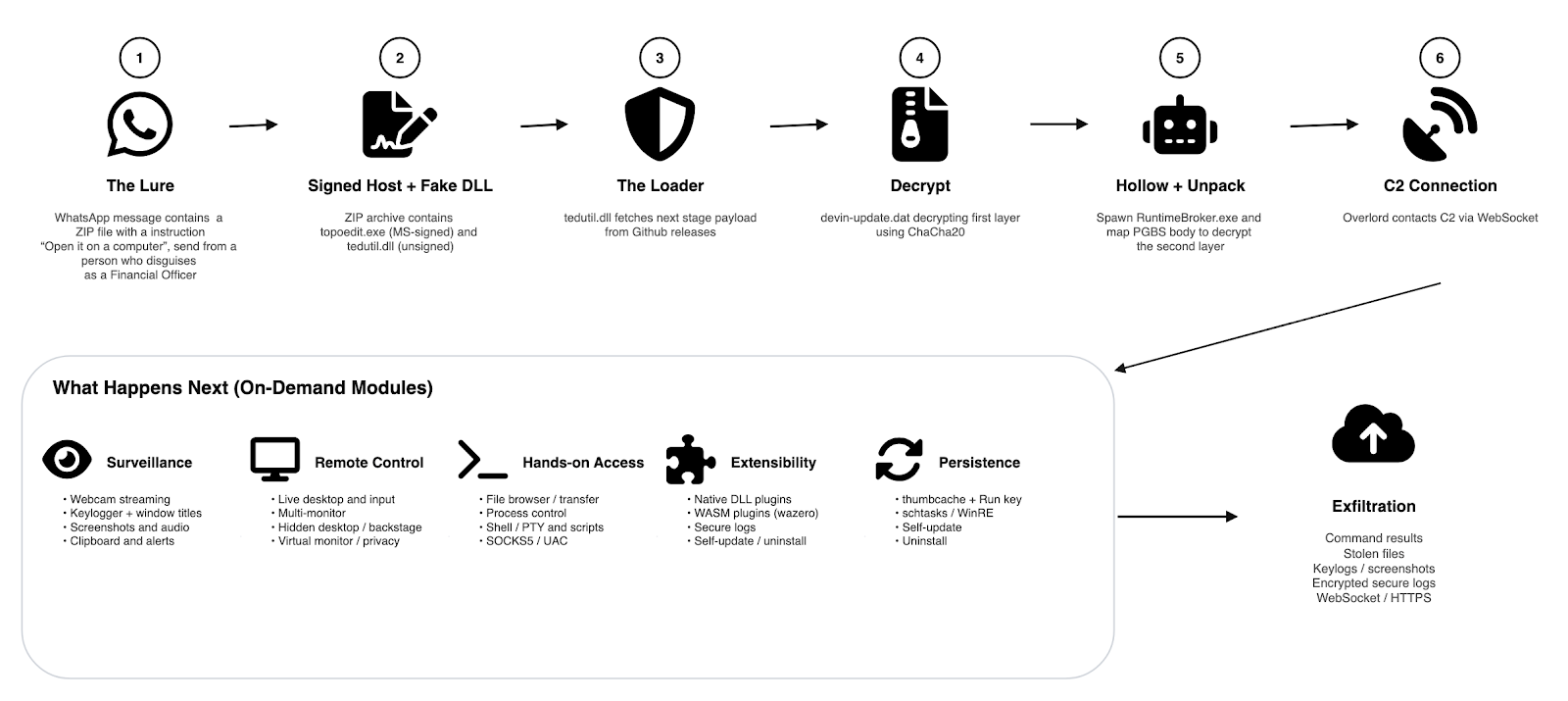
Overlord RAT: A WhatsApp phishing campaign is targeting Malaysia and deploying the Overlord RAT. Researchers believe a threat actor named TankRat is behind the campaign. [NetbyteSEC]
Sponsor section
In this sponsored product demo Sublime Security co-founder and CEO Josh Kamdjou joins Risky Business podcast host Patrick Gray to show off the company's email security platform, including its latest agentic AI bells and whistles.
APTs, cyber-espionage, and info-ops
Vapor Panda: A Chinese state-linked hacker group named Vapor Panda has been using the DeepSeek and ARTEX AI agents to orchestrate a major global hacking campaign. The group has breached more than 200 organizations across Latin America, Europe, Asia, and the Middle East. The campaign started just two weeks ago and moved at super fast speed, hacking the targets in just 11 days. Vapor Panda is the second Chinese APT group to adopt ARTEX AI agents for hacking operations after Storm-0940. [CrowdStrike]
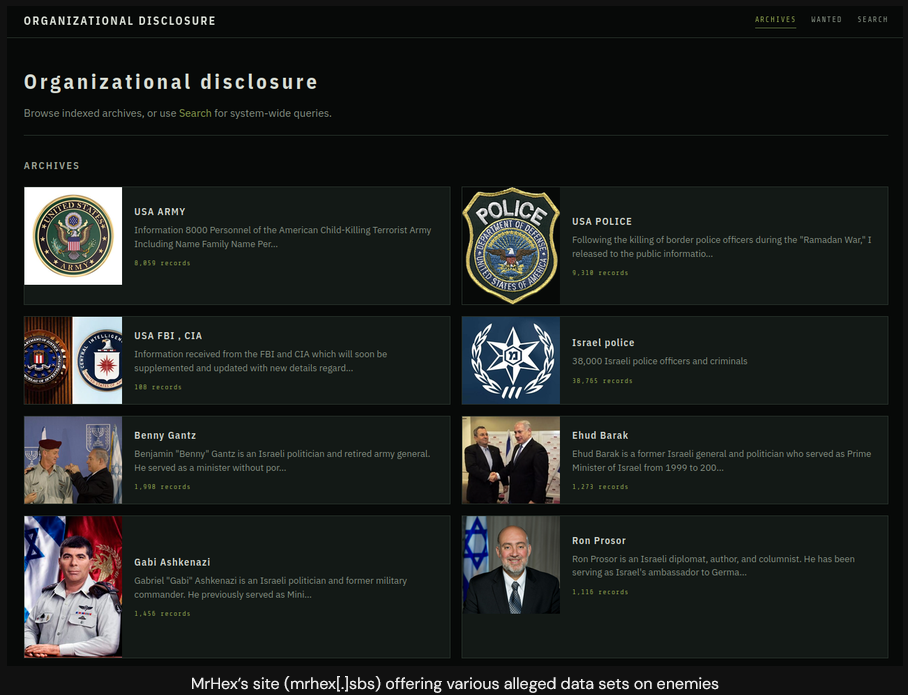
MrHex: A new Iranian-backed hacking group has reared its head. Named MrHex (also MrDarkRoot and Darku3er), the group is slowly evolving from a classic hack-and-leak operation to an ICS hacking outfit. [DomainTools]
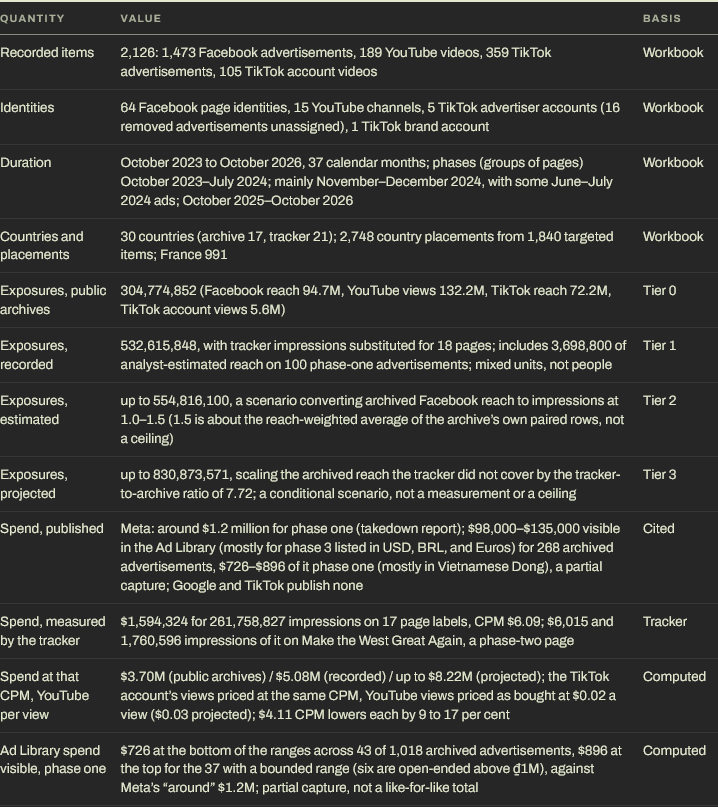
Suspected Israeli info-op: A massive influence operation targeted European audiences for almost three years undisturbed. The campaign promoted theories that the Qatar government was behind a campaign to push Muslim immigrants into the EU and replace white Europeans in a theory known as "The Great Replacement." The campaign was active on Facebook, YouTube, Twitter, and TikTok where it spent millions of USD to show more than half a billion ads. OpSec leaks suggest the campaign was run from Israel. [Dysinfluence]
"The evidence indicates with moderate to high confidence that the campaign originated in Israel, with other entities acting as contractors for various dimensions of the campaign. Campaign material passed on two occasions through former Gaza Humanitarian Foundation head Johnnie Moore and his public-relations firm JDA Worldwide. One Wikipedia editing session on 30 January 2024 included a fixed-line Israeli IP address interleaved with campaign accounts and known German proxy exits. That is consistent with a proxy failure exposing an operator’s own presence in Israel. Edit metadata in the videos on the operation’s Telegram channel puts their production on a Sunday-to-Thursday working week at UTC+3, on machines with Hebrew drive and folder names, and one machine’s clock moved back between 22 and 27 October 2024, the week Israel left daylight saving time. The same Telegram metadata also includes the same name as a prominent Israeli political creative campaigner with ties to people working in Israel’s influence industry, including Lior Chorev, who was implicated in a reportedly aborted anti-Qatar operation in October 2023. The narrative, anti-Qatar, anti-Muslim and anti-Iran, is consistent with Israel’s politics, and specifically previous campaigns reportedly contracted by the Israel’s Ministry of Diaspora Affairs through the Tel-Aviv firm STOIC."
Vulnerabilities, security research, and bug bounty
Security updates: Atlassian, AWS, Bitcoin Core, Composer, Drupal, Gigabyte, MongoDB, QNAP, Supermicro, SUSE.
Google Cloud VRP adds new $250k reward: Google has introduced a new top reward for its Google Cloud vulnerability research program. Researchers will be able to earn up to $250,000 for high-impact architectural bugs. This includes tenant-isolation bypasses and complex cross-service logic flaws that can grant attacks full control over an organization's account. [Google Cloud]
BeyondTrust RCE write-up: Rapid7 researchers have published a technical write-up of CVE-2026-102764, an unauthenticated file upload to RCE in BeyondTrust's remote support feature. The bug was patched in mid-October and entered active exploitation a few days later. [Rapid7]
New SMS of Death attack: Security researcher Mark Blaszczyk has developed an exploit for an Android vulnerability that can crash devices with an SMS. The attack does not require any user interaction. It can be triggered by sending a malformed WAP message to the targeted device. It also doesn't leave any traces in the user's SMS inbox. Once exploited, the SMS of Death attack can leave devices unusable for up to 20 minutes. Google patched the bug in last month's Android security bulletin. [SMS of Death]
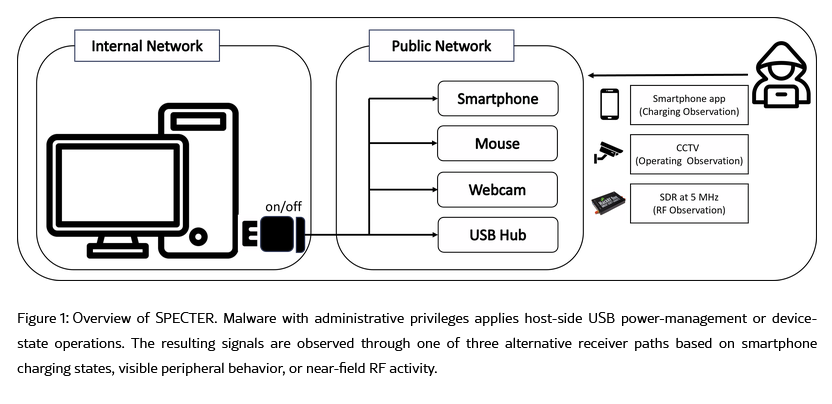
SPECTER attack: A team of academics have created a new attack that uses host-side USB power control to exfiltrate information from air-gapped and network-segregated systems. [arXiv]
Infosec industry
Threat/trend reports: Akamai, Cisco Talos, Eclypsium, and Onapsis have recently published reports and summaries covering various emerging threats and industry trends.
New tool—Project Quarry: Cisco has open-sourced Project Quarry, a Python framework for detecting threats and behavior patterns in agent conversations.
New tool—BLA: Security researcher Timo Zhang has released BLA (Blind LLM Agents), a tool to protect binaries, Electron apps, JS bundles, Python, and WebAssembly code against AI reverse-engineering agents.
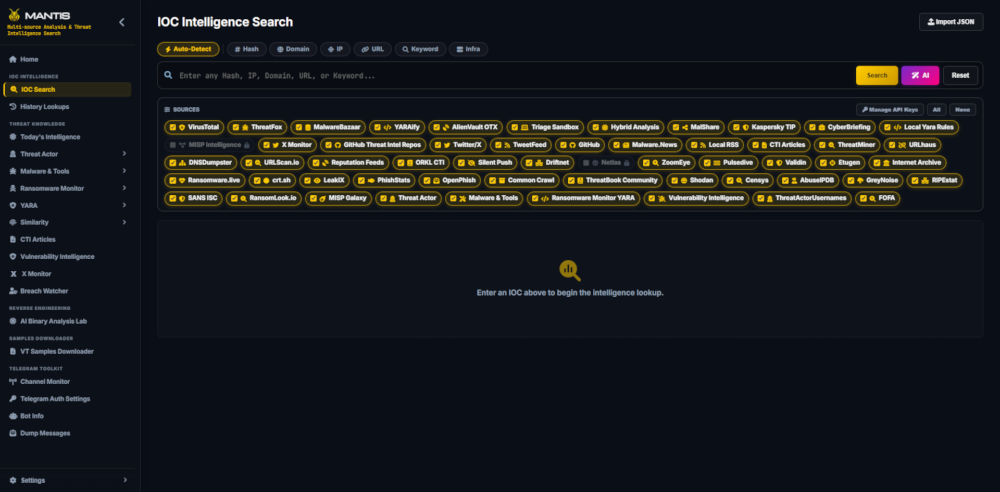
New tool—MANTIS: Kaspersky security researcher Fareed Fauzi has published MANTIS, a threat intelligence workbench for IOC enrichment, OSINT CTI collection, ransomware and breach monitoring, YARA operations, malware similarity analysis, and AI-assisted investigations.
Risky Business podcasts
In this edition of Seriously Risky Business, Tom Uren and Amberleigh Jack talk about new research that shows that Chinese open-weight AI models can be reeducated to remove pro-CCP bias.